Catalog
Programmable Dual 4-Bit Terminator (20V Rating)
Key Features
• One standard "B" output will drive eight terminator circuits.Will terminate a CMOS data bus with up to 40 B-series inputs inputs or 3-state outputs connected at VDDof 5 V.Input terminal protected by standard "B" series ESD protection network.Preserves final logic state.Output after switching is closer to VDDor VSSrail than with a resistor.Requires only one solder connection.Open circuited terminator not used will not affect performance.Can be connected to any CMOS I/O line.Draws current only when logic state is changing.Can be preset.ApplicationsError state identification.Replaces pull-up or pull-down resistorsAvoids floating inputs in modular systemsSharpens transistors (hysteresis)Anti-bounce circuitNOT RECOMMENDED FOR NEW DESIGNSOne standard "B" output will drive eight terminator circuits.Will terminate a CMOS data bus with up to 40 B-series inputs inputs or 3-state outputs connected at VDDof 5 V.Input terminal protected by standard "B" series ESD protection network.Preserves final logic state.Output after switching is closer to VDDor VSSrail than with a resistor.Requires only one solder connection.Open circuited terminator not used will not affect performance.Can be connected to any CMOS I/O line.Draws current only when logic state is changing.Can be preset.ApplicationsError state identification.Replaces pull-up or pull-down resistorsAvoids floating inputs in modular systemsSharpens transistors (hysteresis)Anti-bounce circuitNOT RECOMMENDED FOR NEW DESIGNS
Description
AI
CD40117B is a dual 4-bit terminator that can be programmed by means of STROBE and DATA control bits to function as pull-up or pull-down resistors. The CD40117B can also be programmed to function as latches to terminate any open or unused CMOS logic when used with 3-state logic or during a power-down condition. Considerable savings in power and board space can be realized when this device is used to replace pull-up or pull-down resistors. When the STROBE is in the logic "1" state, the terminator functions as a pull-up resistor if the DATA input is a logic "1" or as a pull down resistor if the DATA input is a logic "0".
When the STROBE is in the logic "0" state, the terminator performs the latch functions, i.e., it follows the changing states of the bus. If the bus goes into the high-Z state or into a power-down condition, the latched terminator retains the data ("1" or "0") that the bus carried before it switched to the high-Z or power-down state. If and when the bus changes from the high-Z state to the state opposite to that which the latch is storing, the bus will override the latch and the terminator will reflect the state on the bus. The small geometries chosen for the inverters in the latch allow this override mode. When checking the data bus whose last state is being preserved by the terminator, a resistor should be used in series with the probe whose input capacitance could trip the small latches. The resistance should be in excess of the output impedance of the latch, i.e., R should be > 30 Kat VDD= 10 V.
The STROBE and DATA inputs in each section can be paralleled allowing this device to be used as an 8-bit bus terminator.
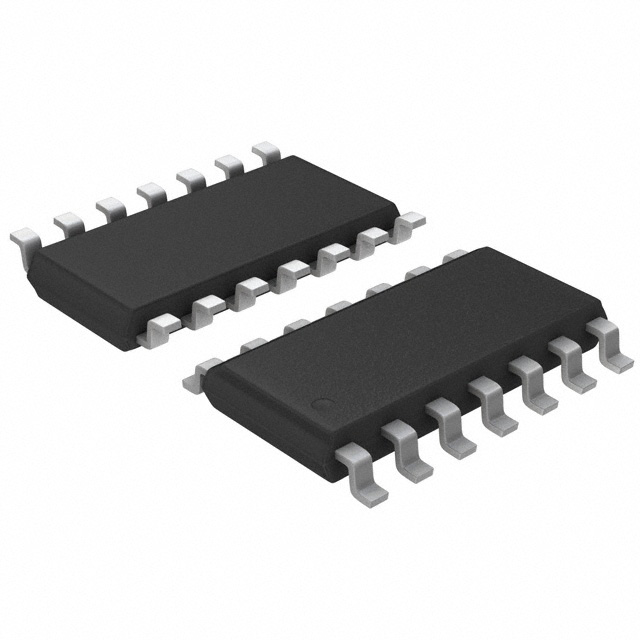
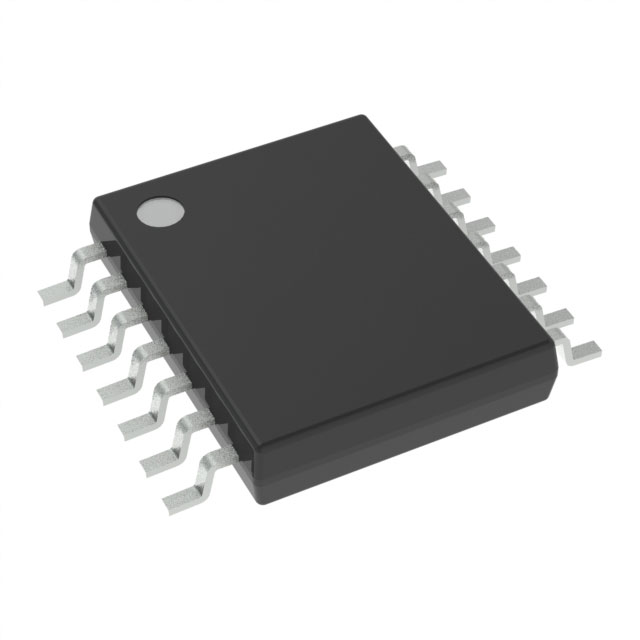
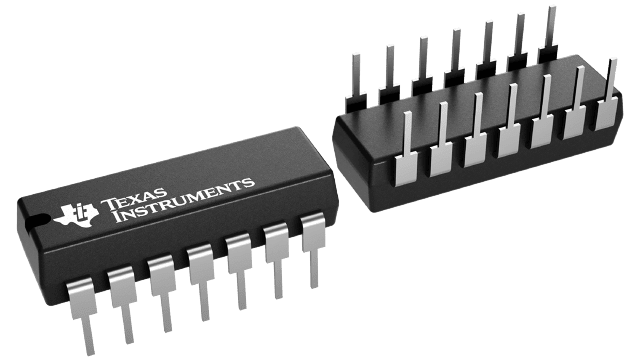
The CD40117B types are supplied in 14-lead dual-in-line plastic packages (E suffix), 14-lead small-outline packages (M, MT, M96, and NSR suffixes), and 14-lead thin shrink small-outline packages (PW and PWR suffixes).
CD40117B is a dual 4-bit terminator that can be programmed by means of STROBE and DATA control bits to function as pull-up or pull-down resistors. The CD40117B can also be programmed to function as latches to terminate any open or unused CMOS logic when used with 3-state logic or during a power-down condition. Considerable savings in power and board space can be realized when this device is used to replace pull-up or pull-down resistors. When the STROBE is in the logic "1" state, the terminator functions as a pull-up resistor if the DATA input is a logic "1" or as a pull down resistor if the DATA input is a logic "0".
When the STROBE is in the logic "0" state, the terminator performs the latch functions, i.e., it follows the changing states of the bus. If the bus goes into the high-Z state or into a power-down condition, the latched terminator retains the data ("1" or "0") that the bus carried before it switched to the high-Z or power-down state. If and when the bus changes from the high-Z state to the state opposite to that which the latch is storing, the bus will override the latch and the terminator will reflect the state on the bus. The small geometries chosen for the inverters in the latch allow this override mode. When checking the data bus whose last state is being preserved by the terminator, a resistor should be used in series with the probe whose input capacitance could trip the small latches. The resistance should be in excess of the output impedance of the latch, i.e., R should be > 30 Kat VDD= 10 V.
The STROBE and DATA inputs in each section can be paralleled allowing this device to be used as an 8-bit bus terminator.
The CD40117B types are supplied in 14-lead dual-in-line plastic packages (E suffix), 14-lead small-outline packages (M, MT, M96, and NSR suffixes), and 14-lead thin shrink small-outline packages (PW and PWR suffixes).